

Micro‑Influencers & UGC: The Authentic Duo That Moves Markets
Today’s most successful campaigns combine strategy with realness.
In a time where consumers are increasingly savvy and often skeptical about traditional advertising, one thing still cuts through the noise: authenticity. That’s why smart marketers are no longer choosing between influencer marketing and user‑generated content (UGC). Instead, they’re combining the two for maximum impact.
Micro‑influencers, with their loyal niche followings, bring credible storytelling and targeted reach. Meanwhile, UGC, created by real customers, provides raw, relatable social proof. These aren’t separate strategies; they’re a natural pairing. Together, they’re helping brands build deeper trust, stronger communities, and more conversions.

WHY MICRO-INFLUENCERS STILL MATTER
Micro‑influencers (creators typically followed by between 10,000 and 100,000 people) are increasingly seen as the sweet spot in influencer marketing. They offer the reach needed to make an impact, but with a level of intimacy and trust that mega-influencers can’t always match. Unlike traditional celebrities, micro-influencers often feel like friends or peers. They share their daily routines, personal struggles, and honest opinions, creating content that feels more like a conversation than a sales pitch.
This relatability builds genuine trust. And with that trust comes higher engagement. Micro-influencer posts often see more likes, comments, and shares because their audiences are truly invested, not just passive scrollers. Many brands report that micro‑influencers drive better clickthrough and conversion rates than their larger counterparts, largely due to this stronger emotional connection.
From a budget perspective, they’re also a smart play. Micro-influencers are more affordable than macro or celebrity influencers, which allows brands to scale campaigns by partnering with several voices across different niches. Whether you're targeting fitness fanatics, eco-conscious moms, or home DIY lovers, there’s likely a micro‑influencer who speaks directly to that group – and does it authentically.
A bonus that often gets overlooked: these partnerships generate a steady stream of high-quality content. Photos, videos, testimonials, and tutorials created by influencers can be repurposed across your brand’s digital channels from website hero banners to paid social campaigns, maximizing your content ROI.
WHAT IS UGC - AND WHY DOES IT MATTER?
User‑Generated Content (UGC) is any form of content: photos, videos, testimonials, or reviews, created by customers, not paid partners. It’s the modern version of word-of-mouth, and it brings major marketing advantages:
Social proof: Real users using and loving your product.
Low lift, high trust: No scripts, just genuine experiences.
Repurposable: Great for social feeds, emails, landing pages, and more.
Community-building: Encourages people to engage, share, and feel seen.
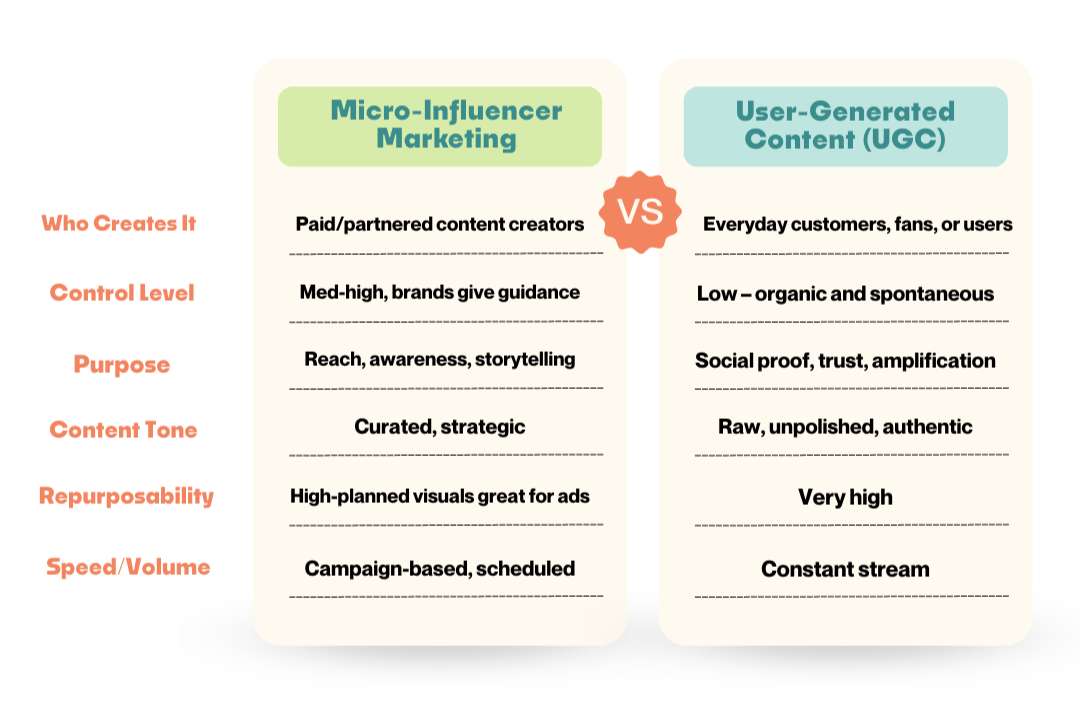
What makes UGC so powerful is its inherent trust factor. It’s unscripted, unfiltered, and clearly not incentivized, which makes it more believable. It’s also incredibly flexible. You can weave UGC into your social feed, email campaigns, product pages, landing pages, you name it. And because it’s created by your community, it builds an ongoing sense of connection and involvement.
WHY MICRO-INFLUENCERS AND UGC WORK BETTER TOGETHER
While both micro‑influencers and UGC are effective on their own, combining them can lead to compounding results. Micro-influencers can act as catalysts for UGC – encouraging their followers to post, share, or engage with your brand in ways that naturally spark more content creation.
Instead of thinking of them as two separate tactics, consider them two parts of a well-oiled trust engine. Influencers start the conversation. UGC keeps it going. Together, they build momentum that feels genuine, scalable, and community-driven.
HOW TO COMBINE MICRO-INFLUENCERS & UGC FOR MAXIMUM ROI
Set Clear, Measurable Goals: Before launching a campaign, ask yourself what success looks like. Are you trying to raise awareness for a new product? Increase conversions on your website? Collect more customer content for future use?
Having clear goals helps determine how much weight to give influencer partnerships vs. UGC activation, and it helps you track impact effectively.
Choose Influencers Who Inspire Action:Not all influencers are created equal. Look beyond follower count and engagement rate. Focus on creators who actually inspire their communities to participate; whether that’s through encouraging comments, tagging the brand, or creating their own content. You want influencers who can turn passive viewers into active contributors.
Build Campaigns Around Participation:Don’t just hope UGC shows up. Design for it. Structure your campaigns in a way that invites participation. For example…
-Launch a branded hashtag/keyword challenge that’s easy to join.
-Ask influencers to unbox your product and prompt followers to share their own unboxings.
-Run a “Tag us to be featured” campaign that rewards customers for posting.
-Create a giveaway that requires photo or video submissions.
These types of activations help shift your audience from consumers into collaborators.
Amplify UGC Across Your Marketing Channels: Once customers start posting, make the most of it. Repost high-quality UGC on your own Instagram feed. Use real customer testimonials in your email marketing. Feature community photos on your product pages. Even better, have your micro‑influencers reshare some of the UGC as part of their own content. This not only builds a stronger brand narrative but also creates a virtuous cycle of trust and engagement.
Reward Content Creation: People love to be recognized. Offering simple rewards can dramatically increase the volume and quality of content your customers create. You don’t need to break the bank, consider this..
-Small promo codes or discounts
-Social shoutouts or reposts
-VIP early access to new products
-Entry into exclusive ambassador programs
By showing appreciation, you’ll turn occasional customers into loyal brand advocates.
Track everything: Finally, don’t guess – measure. Track key metrics like…
-Engagement and conversion rates from influencer content
-Volume and quality of UGC generated
-How often does UGC get repurposed across marketing
-Overall ROI of combined influencer/UGC campaigns
This data will not only prove the value of your efforts but also guide future campaign planning.
REAL EXAMPLE: A SKINCARE CAMPAIGN DONE RIGHT
Let’s say a skincare brand is rolling out a new hydrating serum. Here's what an integrated campaign could look like:
First, the brand sends the product to 10 micro‑influencers who align with its target audience. Each influencer shares a story or reel walking through their first impressions and results after using the serum. In their content, they invite their followers to try the product and share their own experience using a custom hashtag, like #GlowWithUs.
Within days, customers start posting their own photos and mini reviews. The brand begins reposting this content across its social media accounts, features a carousel of real user photos on the product page, and even includes a few customer quotes in a paid Facebook/Instagram ad campaign.
As engagement increases, the brand selects a few standout contributors and invites them to join a new skincare ambassador program, creating long-term relationships with content creators who were originally just happy customers.
WATCH OUT FOR THESE PITFALLS
Quality Control in UGC: Always request permission before reusing customer content, and ensure it aligns with your brand aesthetic.
Short-term influencer relationships: One-off posts don’t build trust. Aim for ongoing collaborations that deepen the story.
Fragmented messaging: Make sure influencer content and UGC feel cohesive in terms of visuals, tone, and campaign theme.
Lack of data tracking: Without measurable outcomes, it’s hard to know what’s working. Use hashtags, discount codes, and affiliate links to tie results to tactics.
THE VERGE MARKETING POV
Too often, brands think they have to choose between influencer marketing and user‑generated content. But the truth is, the most effective campaigns don’t choose - They combine.
By leveraging the reach and relatability of micro‑influencers alongside the credibility and creativity of your community, you’re not just marketing – you’re building relationships. And in today’s crowded digital landscape, that’s what makes all the difference.
